


When a dryer suddenly needs two cycles for a load that used to finish in one, it is easy to assume the appliance is wearing out. Sometimes that is the problem. But when the dryer still tumbles normally and produces plenty of heat, the exhaust system deserves attention before you start shopping for a replacement.
A Tampa resident recently described exactly that situation. Everyday clothing was taking longer, but towels were the real problem. They came out warm after a full cycle but were still noticeably damp. The lint screen was being cleaned consistently, so an appliance problem seemed likely. Inspection of the exhaust route revealed lint buildup farther inside the vent, along with restricted movement at the exterior termination. Heat was being produced, but the moisture removed from the laundry was not leaving efficiently.
That distinction matters. Drying requires more than heat. The dryer also needs a clear route to move hot, moisture-filled exhaust outdoors.
If cycle times have gradually increased, having the complete residential dryer exhaust route evaluated can help determine whether accumulated lint or another vent condition is contributing to the problem.
Why Does a Dryer Need Good Exhaust to Dry Clothes?
Think about what happens to the water in a wet towel.
The dryer heats the fabric, which helps moisture leave it. That moisture enters the warm air inside the dryer. The machine then has to move that humid exhaust through the vent and outside the building.
When everything is operating properly, this process continues throughout the cycle.
If the exhaust route becomes restricted, the dryer can still get hot while struggling to remove moisture. That is why a load can feel very warm and still be damp.
This is one of the most useful observations during troubleshooting. If the dryer is not heating at all, the investigation may lead toward the appliance. If it is producing considerable heat but drying has become progressively slower, the exhaust system moves higher on the list of possible causes.
Lint accumulation is a common reason for restricted exhaust, but it is not the only one. A crushed connection behind the appliance, an obstructed exterior termination, or a poorly configured vent can create similar symptoms.
Professional Dryer Vent Cleaning is appropriate when buildup is actually present. It should not be treated as an automatic answer to every slow-drying complaint.
Tampa residents experiencing a consistent performance change can explore local dryer vent inspection and maintenance options before assuming the dryer itself needs to be replaced.
Lint Buildup May Be Restricting the Dryer Vent
The lint screen captures a large amount of the fibers released by clothing, but it does not catch everything.
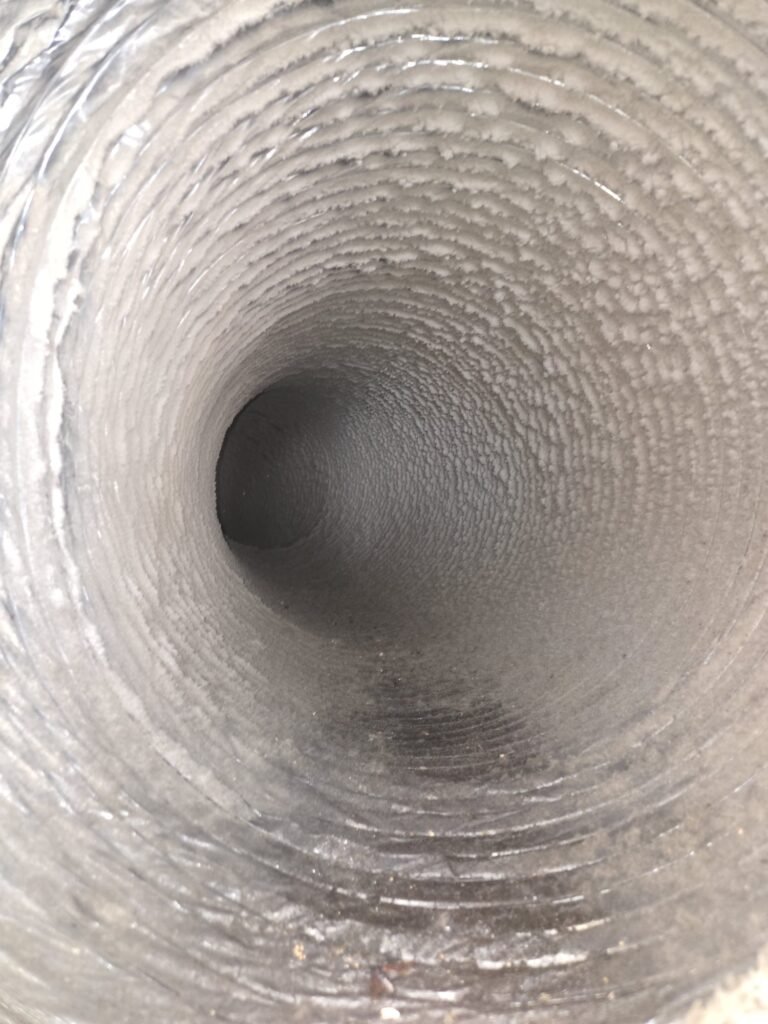
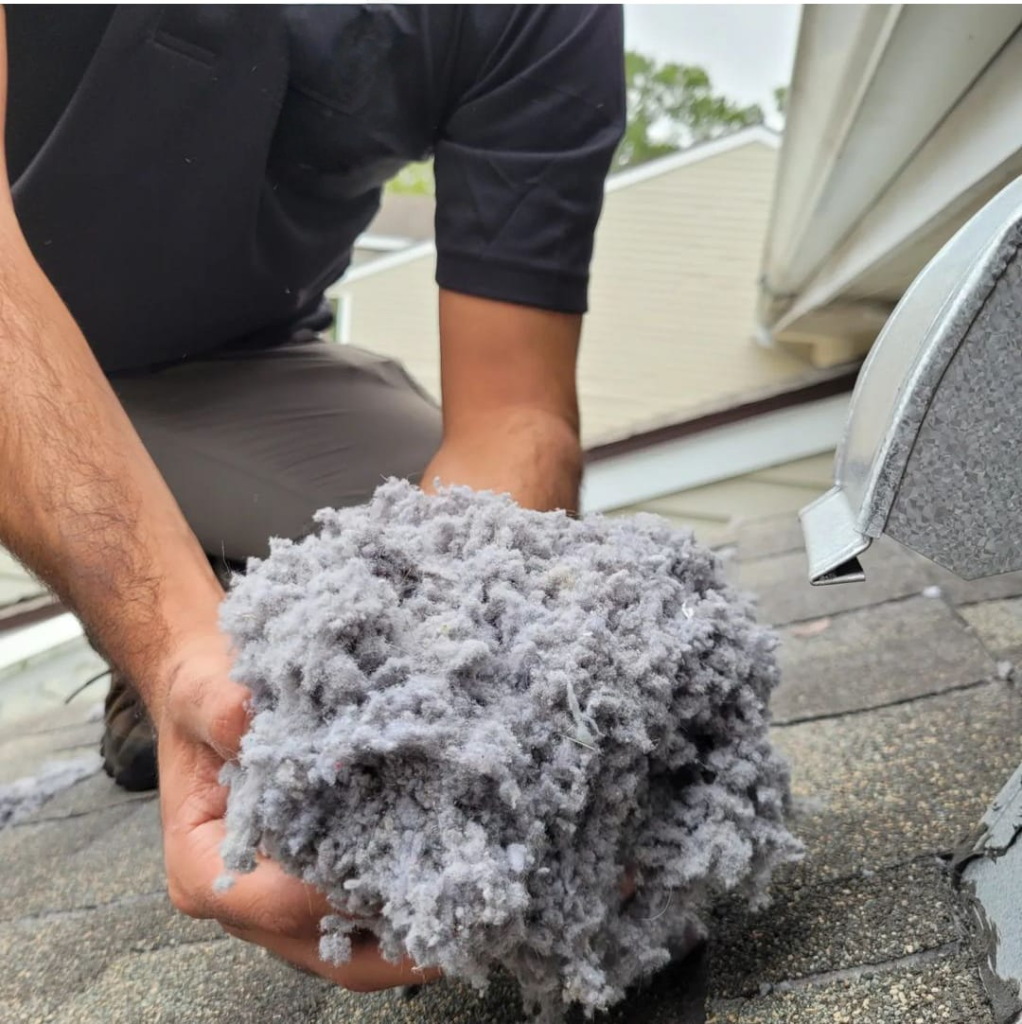
Fine lint can pass through the filter and enter the exhaust system. A small amount after one load is not usually noticeable. Multiply that by hundreds of cycles, however, and material can begin collecting inside the duct.
Bends and longer vent routes can make this more noticeable. As lint settles around a turn, more fibers may catch on the existing buildup. The available opening gradually becomes smaller, making it harder for exhaust to travel outdoors.
The first complaint is often not “my dryer vent is clogged.” It is something much simpler:
“My dryer takes forever.”
That is why Clogged Dryer Vent Cleaning Tampa frequently begins with a performance complaint rather than visible lint.
Heavy fabrics can expose the problem earlier. Towels, jeans, blankets, and bedding hold more moisture than lightweight shirts, so reduced exhaust performance may show up with these loads first.
During an inspection, technicians need to look beyond the first few inches of ductwork. A connection behind the dryer can appear relatively clean while buildup exists much farther downstream.
For this reason, professional residential vent cleaning and inspection should consider the complete accessible exhaust route, not simply the lint screen or the area immediately behind the machine.
The Vent Behind the Dryer May Be Crushed or Kinked
Sometimes the problem is only a few inches away from the appliance.
A dryer needs enough space behind it for the transition duct to maintain a proper path toward the wall connection. When the machine is pushed too far back, that duct can become compressed, sharply bent, or partially collapsed.
This commonly happens after someone cleans behind the dryer, installs a new appliance, or moves the machine during remodeling. Everything may look fine from the front, while the connection behind it is restricting exhaust.
A technician investigating slow drying might pull the appliance forward and discover that the transition duct has been flattened between the dryer and wall. In that situation, cleaning the main vent without correcting the connection would leave an important part of the problem unresolved.
This is also why Dryer Vent Maintenance Tampa should include installation condition, not just lint removal.
If drying problems began shortly after the dryer was moved or replaced, check the timing. A sudden performance change after installation may point toward the connection or vent configuration rather than months of gradual buildup.
Do not repeatedly pull a gas dryer or tightly installed appliance away from the wall if you are unsure how it is connected. A professional evaluation is safer when access is limited.
If the problem continues after basic checks, schedule a dryer vent and connection inspection so the restriction can be identified rather than guessed at.
You May Be Putting Too Much Laundry in the Dryer
Not every long drying cycle is a vent problem.
Overloading is one of the simplest causes to rule out before scheduling service.
Clothing needs room to tumble so warm air can move around the fabric. Pack the drum too tightly and items may remain bunched together, making it harder for moisture to escape evenly.
This is particularly noticeable with towels, comforters, blankets, and other bulky items.
A useful field question is whether every load takes too long or only very large ones. If normal-sized loads dry properly while an overfilled drum struggles, reducing the load size may solve the problem without any repair.
If smaller loads have also become progressively slower, however, the exhaust system deserves closer attention.
For Residential Dryer Vent Cleaning Tampa, this distinction is important because good troubleshooting avoids unnecessary service. The goal is not to blame the vent for every long cycle. It is to identify what changed.
The same principle applies in high-use laundry environments. Businesses considering Commercial Dryer Vent Cleaning Tampa need to account for load volume, equipment usage, exhaust design, and actual vent condition rather than relying on a single symptom.
Slow drying is useful information. The next step is figuring out whether the cause is the laundry load, the appliance, or the path carrying moisture out of the building.
The Outside Dryer Vent May Not Be Opening Properly
When troubleshooting slow drying, the exterior termination is easy to overlook because it may be on the opposite side of the building from the laundry room.
While the dryer operates, exhaust needs to leave through this opening. Depending on the design, a flap or louvers should open as air reaches the termination. If they barely move, remain stuck, or are obstructed by lint and debris, the dryer may struggle to exhaust moisture efficiently.
A simple observation can provide useful information. Run a normal cycle and look at an accessible exterior termination. If you remember the vent opening strongly in the past but it now moves very little, that change is worth investigating.
This does not prove the duct is clogged. The problem could be at the termination itself, farther inside the exhaust route, or near the dryer connection.
One Tampa service visit began with a complaint that bedding was taking almost twice as long to dry. Smaller loads were slower too, but the difference was less obvious. The dryer produced heat normally, and there was no major lint accumulation visible behind the appliance.
Outside, the vent flap barely opened.
Further evaluation found buildup along the exhaust route that was limiting the amount of exhaust reaching the termination. The resident had been increasing cycle time for weeks because the dryer still seemed to work.
The practical takeaway was that slow drying can begin well before a vent becomes completely blocked.
When weak exterior exhaust accompanies longer cycles, having the full dryer vent route professionally evaluated can help determine whether cleaning or another correction is appropriate.
A Long Dryer Vent Can Increase Drying Time
Where the dryer sits in the building matters more than most people realize.
A dryer positioned against an exterior wall may have a relatively short route outdoors. Move that appliance into an interior laundry room, condominium, or larger property and the exhaust may need to travel a much greater distance before reaching the termination.
Longer does not automatically mean defective. A properly designed vent can perform well. But additional distance and changes in direction give lint more opportunities to settle and create more resistance for the dryer to overcome.
Turns deserve particular attention.
Technicians sometimes discover that a slow-drying complaint is connected to a route containing several elbows. The first section behind the machine looks clear, but lint has accumulated farther away where the duct changes direction.
This is one reason Dryer Vent Cleaning Tampa, FL should account for the actual configuration of the system rather than treating every installation the same way.
Tampa also has a wide mix of property layouts. Laundry equipment may be located against an exterior wall in one residence and deep inside another. That difference directly affects the length and accessibility of the exhaust route.
A good Dryer Vent Maintenance Tampa plan takes those characteristics into account. If a long or difficult-to-access system has previously accumulated significant lint, monitoring dryer performance between cleanings becomes especially useful.
Residents who are unsure how their exhaust is configured can review dryer vent maintenance options available throughout Tampa and have the installation evaluated when persistent drying problems appear.
The Lint Screen May Need More Than a Quick Cleaning
Most people know to remove visible lint from the screen after each load. That habit is essential, but occasionally the screen itself deserves a closer look.
If the screen is damaged, heavily coated, or not seated properly, dryer performance may be affected. Some residue can also be less obvious than the familiar layer of loose lint.
The basic maintenance is straightforward. Remove lint after each cycle and periodically inspect the screen for damage or buildup. Follow the dryer’s manufacturer’s instructions if the screen needs more thorough cleaning.
During troubleshooting, technicians also look beyond the screen. A spotless filter does not tell you what condition the exhaust duct is in.
This is where confusion often starts. Someone says, “It can’t be the vent because I clean the lint trap every time.”
Both things can be true. The lint screen can be maintained perfectly while fine fibers gradually collect farther downstream.
If cleaning the screen does not improve a dryer that has been getting progressively slower, professional Dryer Vent Cleaning may be appropriate when inspection confirms accumulation inside the exhaust route.
For residents dealing with persistent slow cycles, requesting a professional dryer exhaust inspection can help separate routine lint-screen maintenance from a restriction deeper inside the system.
Heavy or High-Moisture Loads Naturally Take Longer
Sometimes nothing is wrong with the dryer.
A load of lightweight shirts should not be expected to dry in the same amount of time as bath towels, jeans, blankets, or bedding. Heavy fabrics absorb more water and require more time to release that moisture.
This distinction becomes valuable when diagnosing a problem.
Ask yourself whether drying time has increased for all laundry or whether you are comparing two very different types of loads.
If only a heavy comforter takes longer, that may be normal. If towels that consistently dried in one cycle for years suddenly need two, the change is much more meaningful.
Load preparation matters as well. If clothing comes out of the washing machine unusually wet because the washer did not complete an effective spin cycle, the dryer begins with far more moisture to remove. In that situation, the dryer may appear slow even though the exhaust is functioning properly.
Experienced troubleshooting considers the entire laundry process instead of immediately blaming one component.
This matters for both Residential Dryer Vent Cleaning Tampa and Commercial Dryer Vent Cleaning Tampa. A professional should understand how the equipment is being used before deciding that vent buildup is responsible for longer cycle times.
Tampa’s Humidity Can Make Vent Performance More Noticeable
Tampa’s warm, humid conditions do not cause a dryer vent clog, but local conditions can make efficient moisture removal particularly valuable.
A dryer is constantly taking moisture from wet fabric and sending it outdoors. When the exhaust route is already restricted, that process becomes less effective. The laundry room may feel warmer, clothes may remain damp, and repeated cycles become more noticeable.
This does not mean humidity should be used as an easy explanation for poor dryer performance. If a machine that worked normally throughout previous Tampa summers suddenly becomes much slower, the weather alone is unlikely to explain the change.
Look for what has actually changed in the system.
That may be lint accumulation, an obstructed termination, a crushed connection, increased laundry volume, or an appliance issue.
The same moisture and ventilation principle applies elsewhere in a residence. Cooking also produces heat, moisture, grease, and airborne residue that need effective exhaust. When kitchen ventilation is struggling too, professional range hood cleaning and maintenance can address that separate system.
With a slow dryer, the most useful approach is to compare current performance with what is normal for your particular appliance, laundry habits, and vent configuration. A noticeable, lasting change is far more informative than a single unusually slow load.
The Dryer Itself May Be the Problem
A slow dryer does not always mean the vent needs cleaning.
If the exhaust route is clear and properly connected but clothes still take too long to dry, the appliance deserves attention. Heating components, moisture sensors, controls, or other internal parts can affect how efficiently a cycle runs.
The pattern of the problem can provide useful clues.
If clothing stays cool and wet throughout the cycle, the dryer may not be producing enough heat. If the load becomes very hot but remains damp, restricted exhaust moves higher on the troubleshooting list. Neither observation provides a complete diagnosis, but each helps narrow the possibilities.
A technician may arrive expecting to perform Dryer Vent Cleaning and discover that the exhaust path is already relatively clear. That finding matters. Cleaning a vent that does not have significant buildup will not correct a failed appliance component.
This is why good service begins with understanding the complaint rather than assuming the answer.
Residents can have the dryer exhaust route professionally evaluated when they are unsure whether the problem begins with the appliance or the ventilation system.
How to Tell If Slow Drying Points to a Vent Problem
You do not need specialized equipment to notice useful warning signs.
Start by thinking about how the dryer behaved before the problem began. A gradual increase in cycle time is often more meaningful than one unusually slow load.
Then look for symptoms occurring together.
A vent restriction becomes more plausible when slow drying is accompanied by:
- Clothes that feel very hot but remain damp
- A dryer cabinet that seems hotter than normal
- Weak exhaust at the exterior termination
- A vent flap that barely opens while the dryer runs
- Visible lint around the exterior outlet
- A laundry area that becomes unusually warm during operation
- A noticeable increase in drying time across different types of loads
Suppose towels take twice as long, but lightweight clothing still dries normally. That can indicate an early performance issue because heavier loads demand more effective moisture removal.
Now suppose every type of laundry has become slower, the machine feels unusually hot, and very little exhaust reaches the outside. Taken together, those observations make the vent a much stronger suspect.
When several symptoms line up, Clogged Dryer Vent Cleaning Tampa may be appropriate, but an inspection should still confirm the restriction.
For persistent performance changes, schedule a professional dryer vent evaluation rather than continuing to add time to each cycle.
Why Running a Second Cycle Is Not a Real Fix
Running the dryer again is tempting because it works, at least in the short term.
The towels are damp, so you add another 30 minutes. Eventually they dry, and laundry continues as usual.
The problem is that the extra cycle does not explain why drying performance changed.
If the load is simply too large, reducing its size may solve the issue. If clothes are entering the dryer unusually wet, the washing machine may need attention. But if a restricted exhaust route is responsible, repeatedly extending the cycle leaves the underlying condition unchanged.
There is also an efficiency consideration. A dryer that must operate much longer to complete the same amount of laundry is using additional energy. Over weeks and months, those extra minutes add up.
A practical Dryer Vent Maintenance Tampa routine should therefore focus on preserving normal performance, not waiting until the machine can barely complete a load.
In the field, gradual changes are particularly easy to overlook. Someone may say the dryer “has always taken a long time,” only to remember that towels used to finish in one cycle when the appliance was first installed.
That comparison is useful. Your dryer’s previous performance provides a better baseline than a generic number of minutes found online.
Tampa residents can explore local dryer vent cleaning and maintenance solutions when extra cycles have become a regular part of doing laundry.
Should You Clean the Vent Yourself?
There are several maintenance tasks you can handle without professional equipment.
Clean the lint screen after every load. Vacuum loose lint around the appliance. Make sure the dryer has not been pushed tightly enough against the wall to crush the transition duct. If the exterior termination is safely accessible, observe whether it opens while the machine is operating.
These checks can reveal obvious problems.
Cleaning a complete vent route can be more complicated, particularly when the duct is long, has several bends, runs through a ceiling or wall, or terminates on a roof.
One practical issue is knowing whether the entire route was actually cleaned. Removing lint from the first accessible section may create the impression that the problem has been solved while buildup remains around a bend farther downstream.
Another concern is the condition of the duct itself. Aggressive cleaning or moving the dryer improperly can damage connections, especially when access behind the appliance is limited.
For a short, accessible setup, routine homeowner maintenance may be straightforward. For a difficult configuration or persistent performance problem, professional Residential Dryer Vent Cleaning Tampa can provide a more complete evaluation of the exhaust route.
The objective is not simply to remove whatever lint you can reach. It is to restore a clear, properly connected path from the dryer to the exterior.
Why Commercial Dryers Can Develop the Same Problem Faster
Slow drying is not limited to residential laundry rooms.
Businesses that process towels, linens, uniforms, or other washable materials can put much more demand on their dryers. Instead of a few loads each week, equipment may operate for hours each day.
That higher volume means more lint and moisture move through the exhaust system.
A business may first notice that turnaround times are increasing. Staff begin adding minutes to cycles, or loads that previously finished on schedule start creating delays. Because the equipment still works, the change may be treated as normal wear.
The exhaust route should be part of the investigation.
Commercial Dryer Vent Cleaning Tampa schedules need to reflect operating hours, laundry volume, vent design, and previous inspection findings. A high-use system should not automatically follow the same maintenance interval as a lightly used residential dryer.
Whether the dryer is in a Tampa residence or a busy commercial laundry area, the underlying question is the same: what changed between the time the dryer worked efficiently and the time it started taking longer?
Finding that answer is much more useful than simply adding another 30 minutes to the cycle.
When Slow Drying Means It Is Time for a Professional Inspection
If one unusually heavy load takes longer than expected, there may be nothing wrong with the dryer. When normal loads consistently need extra time, however, the change deserves attention.
Start with the simple possibilities. Clean the lint screen, reduce oversized loads, confirm that clothing is not coming out of the dryer excessively wet, and make sure the dryer has not been pushed against the wall in a way that restricts the connection.
Then pay attention to what happens during the next few cycles.
If the dryer becomes unusually hot, clothes remain damp despite plenty of heat, or exterior exhaust seems weaker than normal, the vent system moves higher on the troubleshooting list.
This is where professional Dryer Vent Cleaning Tampa, FL can be useful when an inspection confirms lint buildup. A technician can evaluate areas that are difficult to assess from the laundry room, including longer duct runs, turns in the exhaust route, connections, and the exterior termination.
For a residential system with persistent performance problems, a complete dryer vent inspection and cleaning can help determine whether restricted exhaust is actually responsible rather than simply assuming the dryer needs replacement.
Getting Your Dryer Back to Normal Performance
After working through slow-drying complaints, the most useful question is rarely, “How many minutes should my dryer take?”
A better question is, “How long did this same dryer take before the problem started?”
Every setup is different. A short vent leading directly through an exterior wall behaves differently from a longer exhaust route with several turns. A household doing three loads per week places different demands on its system than a large family running laundry daily.
That is why a meaningful change from your normal performance is worth investigating.
For ongoing Dryer Vent Maintenance Tampa, keep the lint screen clean after every load, avoid consistently overfilling the drum, make sure the connection behind the machine is not crushed, and occasionally observe an accessible exterior termination while the dryer operates.
If your laundry setup has an unknown maintenance history or the dryer has gradually become slower, explore professional dryer vent and ventilation services available in Tampa from Superb Dryer Vent Cleaning to understand the available inspection and maintenance options.
Ventilation maintenance may also extend beyond the laundry room. Cooking exhaust handles grease, heat, and moisture instead of fabric lint, so households experiencing poor kitchen exhaust performance can consider professional kitchen range hood cleaning and maintenance separately.
Most importantly, do not keep adding extra cycles indefinitely. If normal laundry now takes substantially longer despite appropriate load sizes and settings, schedule a dryer vent inspection to identify what has changed.
For both Residential Dryer Vent Cleaning Tampa and Commercial Dryer Vent Cleaning Tampa, the goal is not to clean a vent simply because the dryer is slow. It is to identify the source of the performance loss and correct the right problem.
Contact Superb Dryer Vent Cleaning when persistent slow drying needs a professional evaluation.
Frequently Asked Questions
Why does my dryer take two cycles to dry clothes?
A large load, clothes entering the dryer too wet, appliance problems, or restricted exhaust can all increase drying time. If normal-sized loads consistently need two cycles and the dryer becomes very hot, have the exhaust system checked.
Why are my clothes hot but still damp?
The dryer may be producing heat correctly while struggling to remove moisture-filled exhaust. A restricted vent is one possible cause, especially when the problem appears together with weak exterior exhaust or increasing cycle times.
How can I tell whether my dryer vent is clogged?
Look for a combination of symptoms such as longer cycles, unusually hot clothing, excessive heat around the dryer, weak exhaust outside, or a vent flap that barely opens. An inspection is the best way to confirm whether lint is actually causing a restriction.
Will cleaning the dryer vent make clothes dry faster?
If lint buildup is restricting the exhaust, removing that restriction can help the dryer operate more effectively. If the vent is already clear and the problem comes from the appliance, load size, or another condition, cleaning alone will not solve it.
Why does my dryer take longer with towels than regular clothes?
Towels hold more water and can release substantial lint, so they naturally require more drying than lightweight clothing. If towels that previously dried in one cycle suddenly require two, however, the change may indicate a developing performance problem.
Can overloading the dryer cause long drying times?
Yes. Clothes need room to tumble and allow warm air to move around them. A tightly packed drum can make drying less effective. Try a normal-sized load before assuming there is a mechanical or vent problem.
Can Tampa humidity make my dryer take longer?
Humidity alone should not be blamed for a major change in dryer performance. Tampa’s warm, humid conditions make effective moisture removal valuable, but a dryer that suddenly becomes much slower should still be checked for load, appliance, connection, or vent issues.
How often should I schedule Dryer Vent Cleaning Tampa, FL?
Annual cleaning is a practical starting point for many households, but usage and vent configuration matter. High laundry volume, long exhaust routes, multiple bends, or previous heavy buildup may justify a different maintenance interval.
Should I replace my dryer if it suddenly takes longer to dry?
Not necessarily. Before replacing an appliance that still heats and tumbles normally, check the lint screen, load size, washer spin performance, dryer connection, exterior termination, and exhaust route. The dryer itself should be investigated if those areas are functioning properly.
When should I call a professional about a slow dryer?
Consider professional evaluation when the slowdown persists across normal loads, several warning signs occur together, the vent has an unknown maintenance history, or the exhaust route is difficult to inspect safely. A proper evaluation can determine whether you need Dryer Vent Cleaning, vent correction, or appliance service.