

Indoor air quality is a growing concern for Tampa homeowners, especially in kitchens where heat, moisture, grease, and airborne particles are constantly produced. Cooking may seem harmless, but over time, it releases pollutants that can linger in the air and settle throughout the home. Kitchen range hoods are designed to capture these contaminants and vent them outside, yet many systems gradually lose effectiveness without proper cleaning. When grease and residue build up inside range hoods and ductwork, airflow drops,s and pollutants remain indoors. Understanding how professional kitchen range hood cleaning protects indoor air quality helps homeowners recognize why maintenance plays such an important role in healthier living environments.
Grease Accumulation Inside Range Hoods Traps Airborne Pollutants
Every cooking session releases microscopic grease particles that rise with heat and steam. These particles are captured by range hood filters and duct surfaces, where they slowly accumulate. Over time, grease layers become thick enough to restrict airflow, preventing contaminants from being properly removed. In Tampa’s warm climate, grease remains sticky, trapping dust, pollen, and moisture. This buildup turns the range hood into a collection point for pollutants rather than a removal system, allowing airborne particles to circulate back into the kitchen and surrounding rooms.
Restricted Airflow Reduces the System’s Ability to Vent Contaminants
As grease builds up, airflow inside the range hood system becomes restricted. Fans struggle to pull air through clogged filters and coated duct walls, reducing the amount of contaminated air expelled outdoors.
Common results of restricted airflow include:
- Cooking odors linger long after meals
- Smoke and steam are spreading throughout the home
- Increased indoor humidity during cooking
- Greater circulation of airborne grease particles
Professional cleaning restores airflow by removing internal obstructions that homeowners cannot reach.
Poor Ventilation Allows Fine Particles to Circulate Indoors
When range hoods fail to vent properly, fine particles released during cooking remain suspended in the air. These particles can travel beyond the kitchen and settle in living areas, upholstery, and HVAC systems. In Tampa homes where air conditioning keeps windows closed most of the year, trapped pollutants have fewer escape routes. Over time, this circulation contributes to stale indoor air, surface residue buildup, and discomfort for occupants sensitive to airborne contaminants.
Humidity Intensifies Indoor Air Quality Problems in Tampa Kitchens
Tampa’s high humidity plays a major role in how range hood buildup affects indoor air quality. Moist air combines with grease residue inside hood systems, creating a dense coating that traps even more particles. Humidity also slows evaporation, meaning contaminants remain airborne longer.
Humidity-related impacts on range hood performance include:
- Faster grease accumulation inside ductwork
- Increased condensation within vent paths
- Greater potential for microbial growth on residue
- Reduced efficiency during extended cooking sessions
Professional cleaning addresses these hidden moisture-related issues before they escalate.
Unclean Filters Allow Grease and Odors to Reenter Living Spaces
Range hood filters are the first line of defense against airborne grease and particles. When filters become saturated, they lose their ability to capture contaminants. Airflow may bypass clogged filters, carrying grease and odors back into the kitchen. Many homeowners clean visible filter surfaces but miss deeper internal buildup. Professional cleaning ensures filters and internal components are thoroughly cleaned, restoring their ability to protect indoor air quality effectively.
Built-up Residue Increases Fire and Smoke Risks
While air quality is the primary concern, grease accumulation also increases fire risk. Grease is highly flammable, and buildup inside range hoods can ignite if exposed to high heat. Even without a fire, overheated grease produces smoke that quickly spreads indoors.
Risks associated with neglected range hood systems include:
- Increased smoke during normal cooking
- Greater heat retention near cooking surfaces
- Potential ignition of internal grease layers
- Poor visibility due to lingering haze
Routine professional cleaning reduces these hazards while improving air quality.
Professional Cleaning Reaches Hidden Areas Homeowners Cannot Access
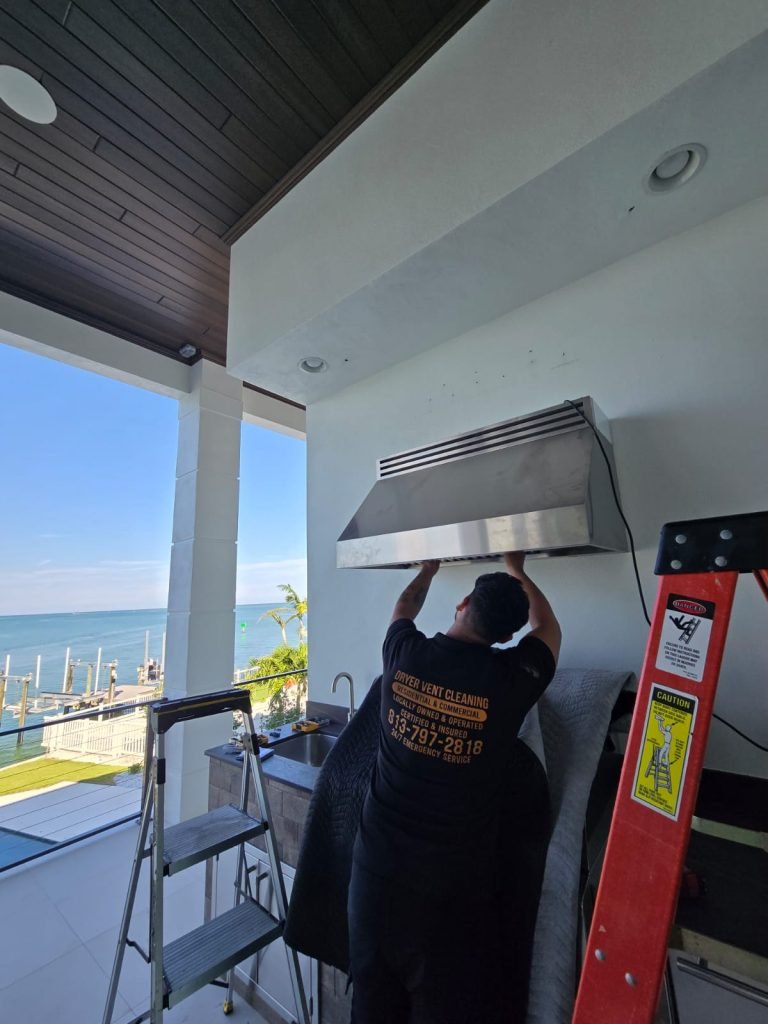
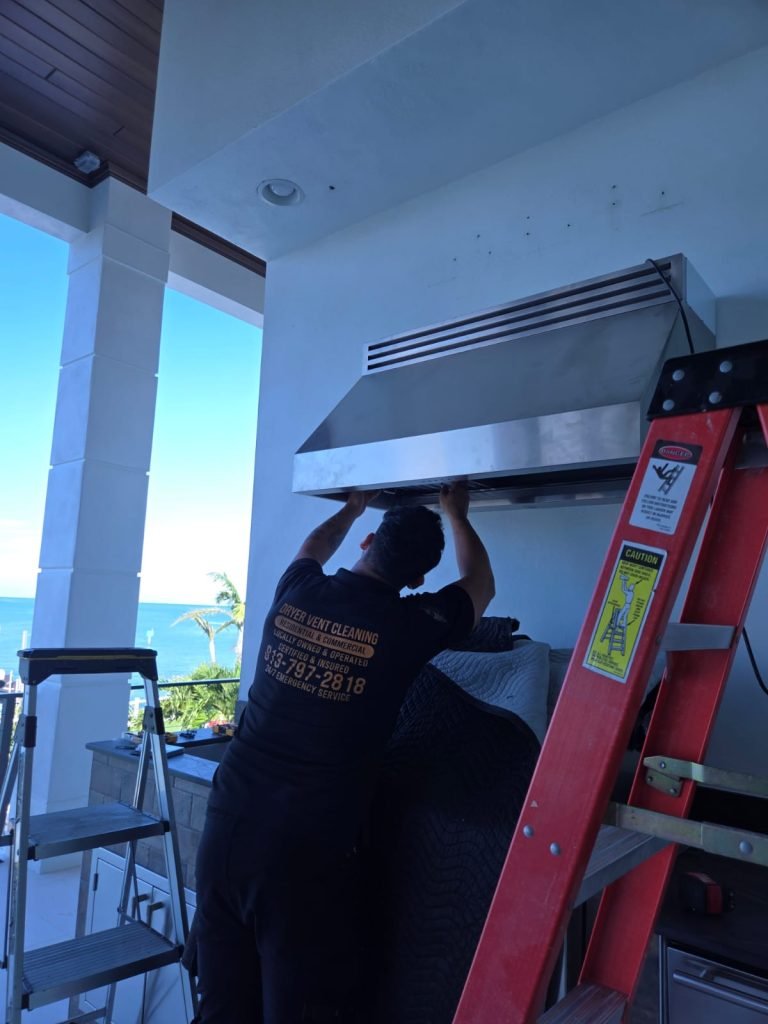
Surface cleaning only addresses what is visible. The most damaging buildup occurs inside ductwork, fan housings, and internal vent paths. These areas are difficult or impossible for homeowners to clean safely. Professional range hood cleaning reaches deep into the system, removing layers of grease that restrict airflow and trap pollutants. By addressing the entire ventilation path, professional service restores the system’s original performance and protects indoor air quality more effectively than surface cleaning alone.
Improved Ventilation Reduces Moisture and Odor Retention
When range hoods operate at full capacity, they remove heat, moisture, and odors efficiently. This prevents steam from spreading into the home and reduces humidity levels during cooking. In Tampa kitchens, moisture control is especially important for comfort and air quality. Professional cleaning improves ventilation strength, helping maintain balanced indoor conditions and reducing the buildup of odor-causing particles on surfaces and furnishings.
Cleaner Systems Support Healthier Breathing Environments
Indoor air filled with cooking byproducts can irritate airways, especially for individuals with allergies or respiratory sensitivities. Fine particles and odors may cause discomfort over time. A properly cleaned range hood removes these contaminants at the source. Improved airflow means fewer pollutants circulating through the home, contributing to a fresher, healthier breathing environment for occupants.
Neglected Range Hoods Contribute to Whole Home Air Quality Issues
Kitchen ventilation problems rarely stay isolated. Pollutants that remain indoors often spread to other rooms and enter HVAC systems. Once inside the ductwork, contaminants circulate throughout the home. Maintaining clean range hoods helps reduce the overall pollutant load entering other systems. This proactive approach supports whole-home air quality and reduces the need for frequent cleaning elsewhere.
Conclusion
Professional kitchen range hood cleaning plays a critical role in protecting indoor air quality in Tampa homes. Grease buildup, restricted airflow, humidity, and neglected filters all contribute to trapped pollutants that circulate indoors. Over time, these issues affect comfort, cleanliness, and health. Addressing buildup through professional cleaning restores ventilation performance and helps maintain a healthier indoor environment. In the final stage of ensuring consistent airflow and cleaner air, Superb Dryer Vent Cleaning provides access to professional kitchen ventilation care, along with related services and contact information available throughout the website.
Frequently Asked Questions
1. Why does my kitchen feel stuffy after cooking?
Restricted airflow traps heat and airborne particles indoors.
2. Can grease affect indoor air quality?
Yes, grease traps pollutants and circulates them back into the air.
3. How often should range hoods be professionally cleaned?
Frequency depends on cooking habits and system use.
4. Does humidity make range hood buildup worse?
Yes, moisture accelerates grease accumulation.
5. Are clogged filters enough to cause poor ventilation?
Yes, saturated filters significantly reduce airflow.
6. Can poor ventilation affect other rooms?
Yes, pollutants spread through the home.
7. Does professional cleaning improve airflow immediately?
Yes, removing buildup restores ventilation performance.
8. Are odors a sign of ventilation problems?
Lingering odors often indicate restricted airflow.
9. Can range hood buildup increase fire risk?
Yes, grease accumulation is flammable.
10. Is surface cleaning enough to protect air quality?
No, internal components require professional cleaning.