

In the 2026 Tampa residential landscape, the intersection of high humidity and mechanical appliance demand creates a unique set of safety challenges. While many homeowners focus on traditional fire prevention measures, the most significant thermal threat often resides within the laundry room exhaust system. According to national fire safety data, thousands of residential structural fires are ignited annually due to the accumulation of combustible lint within dryer vents. In the Tampa region, where dryers often run at high frequencies to combat the moisture-laden environment, a restricted vent is a technical precursor to disaster. At Superb Dryer Vent Cleaning, we view every service call as a critical safety intervention. By performing a comprehensive exhaust system restoration, we technically eliminate the primary fuel source for dryer fires, ensuring your home remains protected from the hidden dangers of lint-induced ignition.
The Thermodynamics of Lint Ignition: Understanding the Flashpoint
To technically grasp the fire risk, one must evaluate the chemical properties of dryer lint. Lint is a highly porous, low-density material composed of cotton and synthetic fibers, making it an ideal “tinder” for combustion. When a vent is restricted, the dryer’s blower motor cannot effectively eject the thermal energy generated by the heating element. This leads to “Heat Stagnation,” where the internal temperature of the dryer cabinet rises until it reaches the flashpoint of the accumulated lint. Technically, most modern appliances are equipped with high-limit thermostats designed to interrupt the circuit during an overheat event; however, in a restricted system, these switches are forced to cycle repeatedly, eventually leading to a mechanical failure where the heater remains engaged. Our residential safety protocols focus on restoring the 1,200+ FPM (Feet Per Minute) airflow velocity needed to keep internal temperatures within safe engineering tolerances.
- Thermal Saturation Management: We technically analyze the heat output at the termination point to ensure your system is not “trapping” dangerous levels of thermal energy within your wall cavities.
- Flash-Ignition Mitigation: By performing deep-source removal, we technically eliminate the fuel load that can be ignited by a single spark from the dryer’s motor brushes or heating coils.
- Safety Switch Integrity: Restoring proper airflow reduces the “Duty Cycle” of your safety limit switches, technically preventing them from burning out and leaving your home unprotected.
Pro-Tip: If you notice a faint “scorched” odor or if your laundry room feels excessively humid while the dryer is active, it is a technical warning sign of an airflow bottleneck. This moisture “back-drafting” is often the final indicator before a thermal event. We recommend an immediate professional diagnostic to verify the safety of your exhaust path.
Mechanical Failure Points and the Danger of Combustible Venting
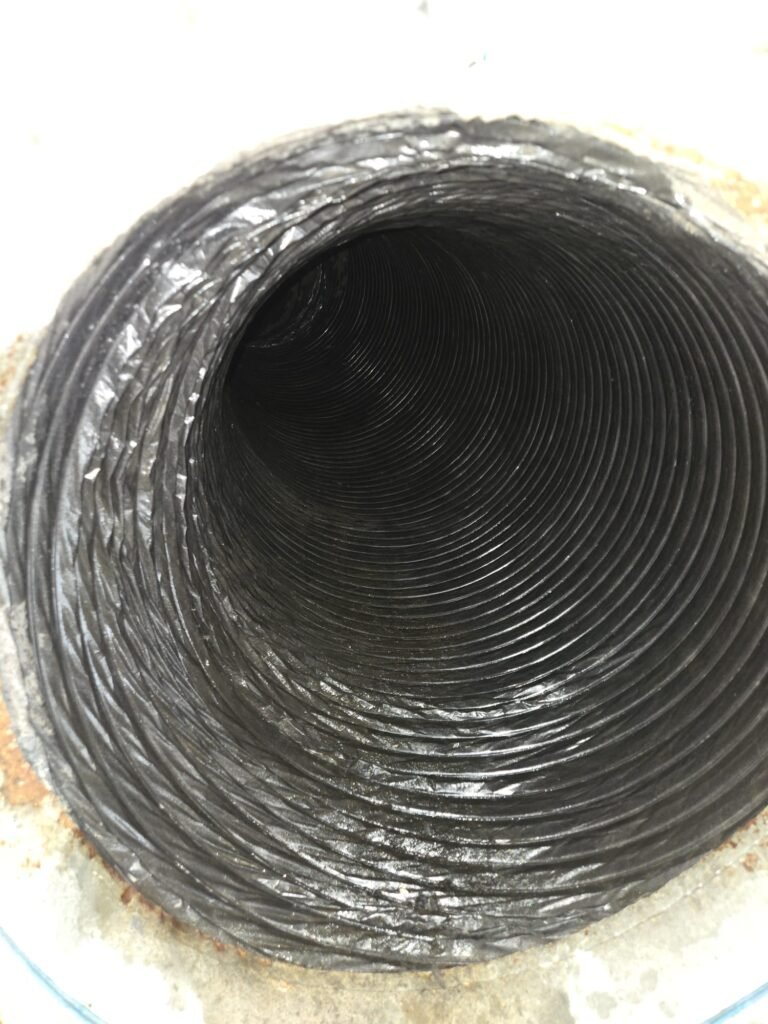
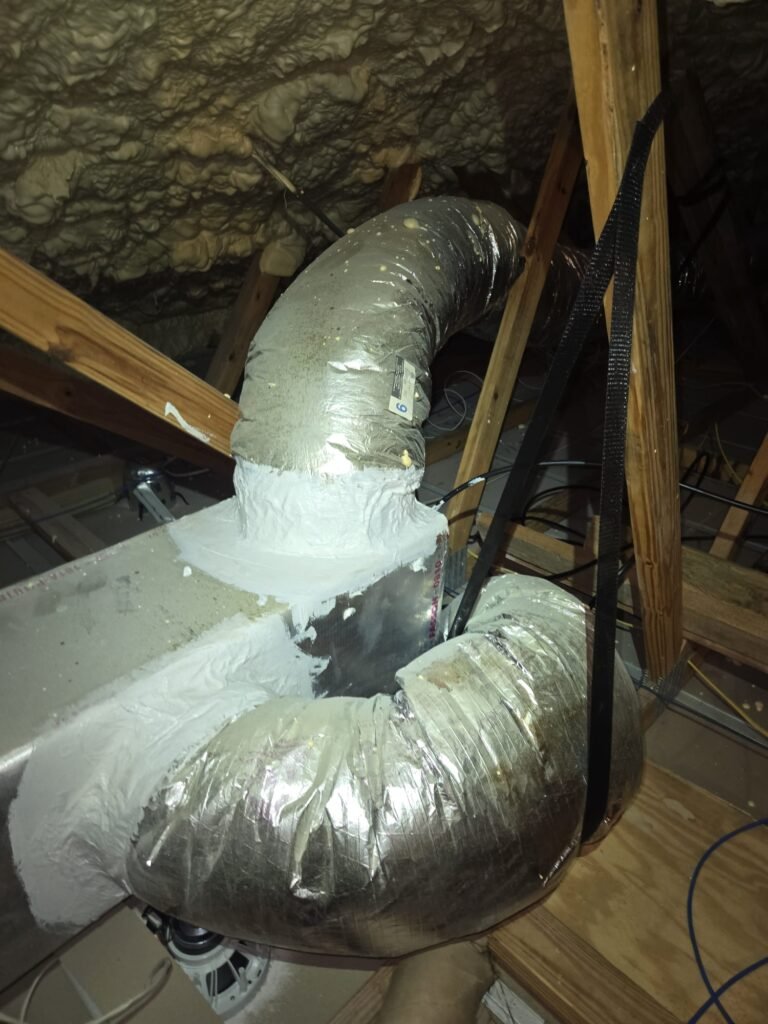
The architectural configuration of many Florida homes often requires long, complex vent runs that utilize flexible transition ducts. Technically, using “Foil” or “Plastic” accordion hoses is a major risk factor, as these materials have low melting points and can actually contribute to the spread of a fire. When a dryer is pushed against the wall, these hoses kink, creating a “Sediment Trap” where lint accumulates at the highest point of heat concentration. If a fire starts inside the dryer, a plastic or foil vent will technically melt in seconds, allowing the flames to enter the wall structure. Our technical restoration services prioritize the installation of rigid or semi-rigid metal ducting (UL 2158A) to provide a fire-rated barrier between your appliance and your home’s framing.
- Friction-Loss Reduction: We technically “scour” the interior of metal ducts to remove the sticky residue that allows lint to anchor, reducing the friction that leads to heat buildup.
- Joint Integrity Inspection: We verify that all duct connections are technically secured with foil tape rather than screws, as screws act as “lint-catchers” that create hazardous internal clogs.
- Backpressure Verification: Our technicians utilize digital manometers to technically measure the static pressure in the line, ensuring it does not exceed the 0.60″ WC (Water Column) safety threshold.
Pro-Tip: Check your exterior vent flap periodically. If it does not open at least 45 degrees while the dryer is running, you have a technical obstruction. This lack of “Exhaust Throw” is a primary cause of heat stagnation and can be researched further in our technical blog archive.
Commercial Load Factors: Preventing High-Capacity Thermal Events
For multi-family housing and businesses in Tampa, the fire risk is magnified by the sheer volume of lint produced by high-capacity machines. Technically, commercial dryers generate a significantly higher “lint-to-cycle” ratio, which can overwhelm standard exhaust systems in a matter of weeks. When multiple units share a common manifold or “trunk line,” a clog in one area can technically cause backpressure issues for the entire building. Our commercial dryer vent cleaning protocols are designed for these high-load environments, utilizing industrial-strength rotary agitation and high-volume extraction to ensure the entire exhaust manifold remains fire-safe and compliant with 2026 safety codes.
- Manifold Pressure Balancing: We technically balance the airflow across shared vent lines to prevent “cross-contamination” of lint between different dryer units.
- Booster Fan Maintenance: Many commercial systems rely on booster fans that can technically become ignition sources if their impellers are coated in flammable lint.
- High-Volume Source Extraction: We utilize 5,000 CFM negative air machines to technically ensure that all dislodged debris is captured and removed from the property, leaving zero fuel behind.
Pro-Tip: For property managers, a “long-run” vent that terminates on the roof is a high-risk technical area. Gravity causes lint to settle at the base of vertical rises, creating a dense “plug” that is a major fire trigger. Regular certified maintenance is the only way to ensure these vertical paths remain clear.
Conclusion
How dryer vent cleaning in Tampa prevents house fires is rooted in the science of thermodynamics and mechanical maintenance. By addressing the technical factors of airflow velocity, material integrity, and lint accumulation, homeowners and business owners can significantly reduce their risk of a devastating thermal event. In 2026, professional ventilation restoration is recognized as a non-negotiable component of home safety in the Florida climate. At Superb Dryer Vent Cleaning, we are dedicated to providing the technical expertise and certified standards necessary to protect the Tampa Bay community. Don’t let a hidden clog turn into a life-altering catastrophe; ensure your system is operating at its safest engineering potential.
Securing your home’s mechanical safety is an essential part of responsible property ownership. To stay updated on the latest appliance safety regulations and fire prevention strategies in the Tampa region, you can explore our professional blog center for ongoing guidance. If your dryer is exhibiting signs of airflow restriction or overheating, securing a comprehensive safety estimate is the most reliable path forward. You can discover more about our safety-first mission to see why we are the preferred choice for dryer safety and technical restoration in Florida.
FAQ
How does a dryer vent fire actually start?
Technically, lint accumulates in the vent, restricting airflow. This causes the dryer’s internal temperature to exceed safe limits, igniting the highly flammable lint inside the duct or cabinet.
How often should I clean my dryer vent in Tampa?
Due to the high humidity and high usage in Florida, we technically recommend a professional cleaning every 12 months to maintain a zero-fuel load for fire prevention.
What is the “flashpoint” of dryer lint?
Lint is a Class A fuel that can ignite at temperatures as low as 400°F. In a restricted vent, a dryer’s heating element can technically reach these temperatures in a matter of minutes.
Can I use a plastic transition hose for my dryer?
No. Technically, plastic and thin foil vents are combustible and do not provide the necessary fire-containment rating (UL 2158A) for modern high-heat appliances.
What is the main technical sign of a fire risk?
The most common indicator is an appliance that takes multiple cycles to dry clothes, which technically proves that your system is suffering from extreme airflow restriction.
Does cleaning the lint trap prevent all fires?
No. Technically, a significant amount of fine lint bypasses the primary trap and settles in the internal cabinet and the full length of the vent line, requiring professional extraction.
How do you measure if my vent is safe?
We technically utilize digital manometers and anemometers to measure “Static Pressure” and “Airflow Velocity” (FPM) to ensure they meet manufacturer safety specifications.
Why is professional cleaning better than a DIY kit?
Professional tools are technically designed to scour the entire length of the duct without creating “lint slugs” or damaging the internal surface of the vent line.
What is the “HEPA” advantage in vent cleaning?
HEPA vacuums technically capture 99.97% of particulates, ensuring that the flammable lint we remove is completely sequestered and not blown back into your home.
Do you offer commercial fire safety assessments?
Yes. We provide commercial dryer vent cleaning and technical audits for laundromats, hotels, and apartment complexes in the Tampa region.