


A Tampa homeowner living in a two-story house recently called after noticing that laundry loads were taking much longer to dry than they had just a year earlier. The dryer itself wasn’t very old, and the lint screen was cleaned regularly. At first, the homeowner assumed the appliance was beginning to fail.
After inspecting the vent system, the reason quickly became clear.
The laundry room was located on the second floor, and the dryer vent traveled a considerable distance before reaching an exterior wall. Along the route were multiple turns, vertical sections, and several areas where lint had accumulated over time. The dryer was working properly, but airflow was being restricted by buildup inside a vent system that was far more complex than those found in many single-story homes.
This situation is common.
While every property can experience lint accumulation, multi-story homes often face unique challenges that make regular maintenance even more important. The longer and more complex the vent system becomes, the greater the opportunity for lint buildup, airflow restrictions, and performance issues to develop.
Understanding these differences helps explain why some homes require Dryer Vent Cleaning more frequently than others.
Multi-Story Homes Often Have Longer Vent Runs
One of the biggest differences between single-story and multi-story properties is the distance air must travel.
In many single-story homes, the dryer is positioned relatively close to an exterior wall. This allows moist air and lint particles to exit the property through a short, direct pathway.
Multi-story homes rarely offer that same convenience.
Laundry rooms are often located on upper floors where access to an exterior vent requires a longer route through walls, ceilings, attics, or multiple levels of the structure.
Every additional foot of ductwork creates more surface area where lint can settle.
Over time, this naturally increases the potential for buildup compared to shorter vent systems.
The dryer may still operate normally for months or even years, but gradual restrictions can develop long before noticeable symptoms appear.

More Turns Mean More Opportunities for Lint Accumulation
Length is only part of the equation.
Vent systems in multi-story homes frequently contain more elbows and directional changes than systems found in simpler layouts.
Every bend slightly slows airflow.
Lint particles moving through the system lose momentum when they encounter these turns. As airflow changes direction, some fibers settle along the interior surfaces of the duct.
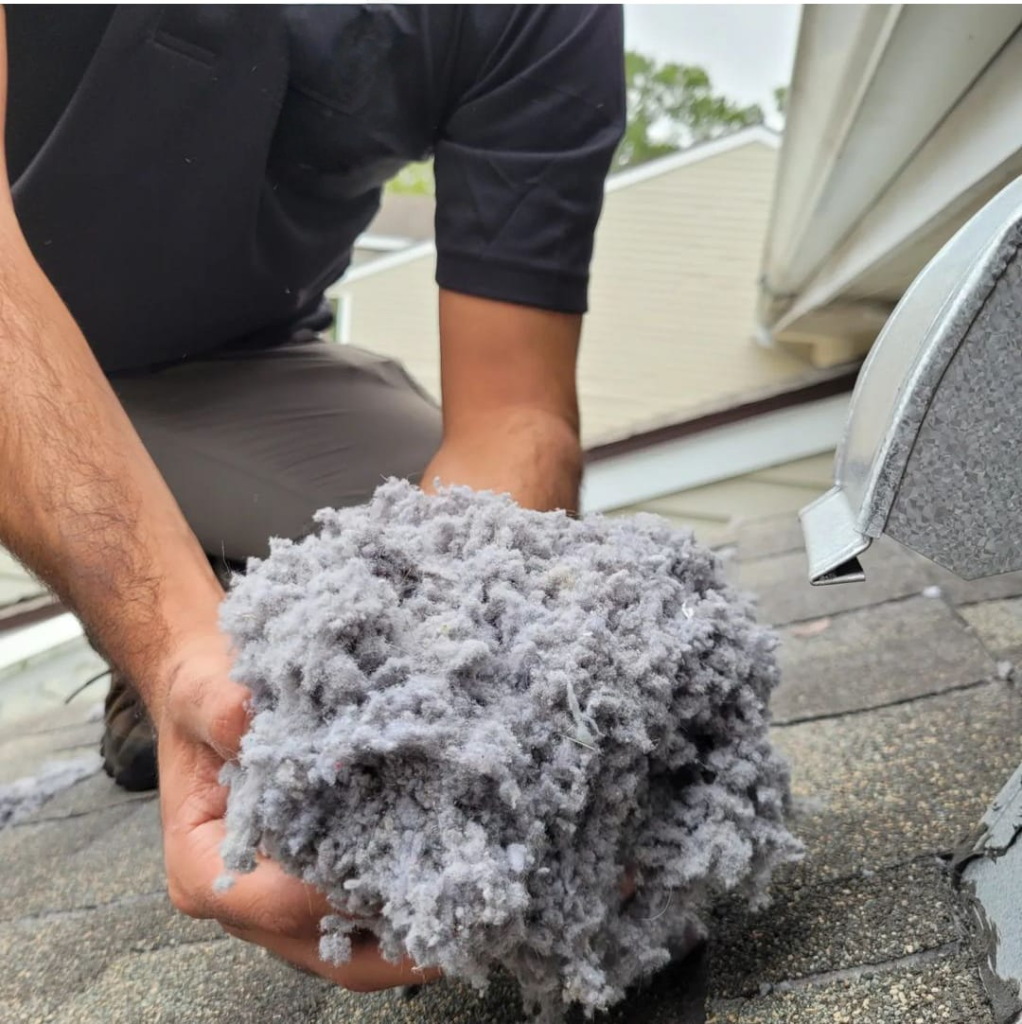
During inspections, it’s common to find heavier accumulation near bends and transition points.
One or two turns may not create significant concerns. However, a lengthy vent route with several elbows can provide numerous locations where buildup gradually develops.
This is one reason why longer systems often benefit from more frequent evaluations.
Tampa’s Climate Can Add to the Challenge
Tampa’s climate creates conditions that can influence vent performance throughout the year.
High humidity remains a constant factor across much of the region. Every drying cycle removes moisture from clothing and sends that moisture through the vent system.
When airflow is strong, moisture exits efficiently.
When airflow becomes restricted, moisture can remain inside portions of the vent system longer than intended.
Lint exposed to moisture often becomes denser and more compact than dry lint alone.
In multi-story homes where air must travel greater distances, these conditions can contribute to buildup developing more quickly than many homeowners expect.
This is one reason Dryer Vent Maintenance Tampa services are often recommended for properties with complex vent configurations.
Vertical Vent Sections Create Additional Resistance
Many multi-story homes contain vertical sections within the vent system.
Unlike horizontal vent runs, vertical pathways require air to travel upward before reaching the exterior discharge point.
Although properly installed systems are designed to accommodate this movement, vertical runs still create additional resistance compared to shorter, direct routes.
The dryer must work harder to push warm air through these sections.
As lint particles travel through the system, some settle along the duct walls rather than reaching the outside.
Over years of use, this gradual accumulation can reduce airflow efficiency.
Properties with significant vertical vent sections often benefit from periodic inspections to verify that airflow remains adequate.
A Service Call That Highlighted the Difference
A family living in a three-story townhouse contacted a technician after noticing increasingly long drying times.
The dryer appeared to be functioning correctly, and the lint screen was cleaned regularly. The homeowners assumed the appliance might need repair.
Inspection revealed something different.
The vent system traveled through multiple levels of the building before reaching an exterior discharge point. Significant lint accumulation had developed in several areas along the route.
Once the vent was cleaned, drying performance improved almost immediately.
The homeowners were surprised to learn that the appliance itself had never been the problem.
The experience highlighted a reality seen frequently in taller homes. Longer vent systems often require more maintenance than homeowners realize.
Modern Dryers Cannot Overcome Restricted Vent Systems
Many homeowners assume newer dryers are capable of compensating for airflow issues.
Modern appliances certainly include advanced technology. Moisture sensors, energy-saving modes, and smart monitoring systems help improve efficiency.
What they cannot do is eliminate lint buildup.
Even the most advanced dryer still relies on proper airflow.
When restrictions develop inside a lengthy vent system, the appliance must work harder to remove moisture from clothing. Drying times increase, energy consumption rises, and performance gradually declines.
In many cases, homeowners mistake these symptoms for appliance failure when the actual issue exists inside the vent system.
Second-Floor Laundry Rooms Are Becoming More Common
Modern home designs increasingly place laundry rooms on upper levels.
This layout offers convenience because bedrooms and closets are often located nearby. Carrying laundry up and down stairs becomes unnecessary.
However, the design also introduces longer vent pathways.
Many of the dryer vent inspections performed in newer homes involve second-floor laundry rooms connected to extended vent systems.
These setups can operate efficiently when maintained properly, but they generally require more attention than short first-floor installations.
Homeowners should understand that convenience sometimes comes with additional maintenance considerations.
Residential and Commercial Properties Share Similar Airflow Challenges
Residential Dryer Vent Cleaning Tampa projects often reveal airflow issues associated with longer vent routes and multi-level home designs.
Commercial Dryer Vent Cleaning Tampa projects frequently involve similar concerns on a larger scale.
Hotels, apartment communities, assisted living facilities, and other multi-story buildings often contain extensive vent networks serving multiple units.
The principles remain the same.
Longer pathways create more opportunities for lint accumulation. More accumulation increases the importance of routine maintenance.
Whether the property is residential or commercial, airflow remains the key factor influencing performance.
Warning Signs That a Multi-Story Home May Need Vent Cleaning
Because buildup develops gradually, homeowners often miss the early warning signs.
Pay attention to symptoms such as:
- Longer drying times
- Multiple drying cycles are becoming necessary
- Excess heat near the dryer
- Rising energy bills
- Weak airflow at the exterior vent
- Damp clothing after normal cycles
- Musty odors during operation
These issues do not automatically indicate a severe blockage, but they frequently suggest that airflow has become restricted.
Addressing the problem early is usually easier than waiting until performance declines significantly.
Why Professional Inspections Matter
The complexity of multi-story vent systems makes professional evaluations particularly valuable.
Many sections of ductwork are hidden behind walls, above ceilings, or within attic spaces. Homeowners often have limited access to these areas.
A professional inspection evaluates:
- Airflow performance
- Vent routing
- Lint accumulation
- Duct condition
- Exterior vent operation
- Potential installation concerns
For homeowners seeking a thorough evaluation, a professional residential dryer vent inspection service can help identify issues before they begin affecting dryer performance.
Looking Beyond the Dryer Itself
Ventilation maintenance should not stop with the dryer.
Properties often contain additional exhaust systems that benefit from routine attention. Proper maintenance of kitchen range hood ventilation systems can support overall airflow performance and help maintain cleaner indoor environments.
Taking a broader approach to ventilation maintenance often provides better long-term results than focusing solely on appliances.
According to the U.S. Fire Administration’s dryer safety recommendations, routine cleaning and maintenance help reduce risks associated with lint accumulation in dryer exhaust systems.
Maintaining Efficiency in Larger Homes
As homes become larger and architectural designs become more complex, vent systems often follow the same trend.
Longer routes, additional bends, and multi-level layouts all influence airflow performance.
Companies such as Superb Dryer Vent Cleaning regularly work with homeowners throughout the Tampa area who are surprised to discover how much their home’s design affects dryer vent maintenance needs. Information about available services can be found through the company’s local service area information or by reaching out through their customer contact page.
Final Thoughts
Multi-story homes offer many advantages, but their dryer vent systems often face challenges that shorter vent configurations avoid. Longer duct runs, additional bends, vertical sections, and Tampa’s humid climate can all contribute to faster lint accumulation and reduced airflow over time. Understanding these factors helps explain why Dryer Vent Cleaning Tampa, FL is frequently more important for multi-story properties than homeowners initially realize.
If drying times have increased or airflow seems weaker than normal, a professional inspection may reveal issues hidden within the vent system.
FAQ Section
Why do multi-story homes need more frequent dryer vent cleaning?
Longer vent runs, additional bends, and vertical duct sections create more opportunities for lint accumulation and airflow restrictions.
Does a second-floor laundry room affect dryer vent performance?
It can. Second-floor laundry rooms often require longer vent pathways, which may increase maintenance needs.
Are vertical dryer vents harder to maintain?
Vertical vent sections can create additional resistance and may allow lint to settle more easily than shorter direct routes.
How often should dryer vents be cleaned in multi-story homes?
The ideal schedule depends on usage and vent design, but annual inspections are generally recommended.
Does Tampa’s humidity affect multi-story dryer vents?
Yes. Humidity can contribute to moisture retention and denser lint accumulation within the vent system.
What are the warning signs of a clogged dryer vent?
Longer drying times, increased energy bills, excess heat, weak airflow, and damp clothing are common indicators.
Can a new dryer solve airflow problems?
No. Even modern dryers depend on proper airflow and cannot eliminate lint buildup within the vent system.
Do larger homes produce more lint?
Not necessarily, but larger homes often contain longer vent systems that are more susceptible to buildup.
Is professional cleaning better than DIY vent cleaning?
Professional cleaning can reach areas of the vent system that are difficult or impossible to access with standard household tools.
What does a dryer vent inspection include?
Inspections typically evaluate airflow, vent condition, lint accumulation, duct routing, and overall system performance.