


Kitchen ventilation plays a critical role in maintaining indoor comfort, air quality, and moisture control, especially in Tampa homes where heat and humidity are part of daily life. Yet many homeowners notice that their kitchen exhaust systems slowly stop working as well as they once did. Cooking odors linger longer, grease settles on cabinets, and heat seems trapped in the kitchen after meals. These issues rarely happen overnight. Instead, ventilation efficiency declines gradually due to a combination of environmental factors, system design, and overlooked maintenance. Understanding the real reasons behind this decline helps homeowners recognize problems early and protect their kitchen environment before airflow becomes seriously restricted.
Grease Buildup Inside Vent Paths Slows Air Movement
One of the primary reasons kitchen ventilation efficiency drops is grease accumulation inside vent paths. Every time food is cooked, airborne grease particles travel through the exhaust system. Over time, these particles stick to interior vent surfaces, forming layers that restrict airflow. In Tampa’s warm climate, grease becomes tacky and traps dust and moisture, accelerating buildup. As the vent pathway narrows, fans must work harder, reducing performance and increasing wear. This buildup often remains hidden inside ducting, making the problem easy to overlook until ventilation noticeably weakens.
Humidity Creates Sticky Conditions Inside Kitchen Vents
Tampa’s high humidity plays a significant role in ventilation problems. Moist air combines with grease residue inside vents, creating a sticky coating that collects airborne debris faster than in drier climates.
Common effects of humidity inside kitchen ventilation include:
- Faster accumulation of residue inside the duct walls
- Increased condensation during heavy cooking
- Reduced airflow due to moisture-weighted debris
- Greater risk of internal vent corrosion
These conditions make ventilation systems degrade more quickly without consistent inspection.
Improper Vent Routing Reduces Long-Term Efficiency
Ventilation systems that use long duct runs, sharp turns, or undersized piping struggle to maintain strong airflow. Each bend or extended run creates resistance that slows air movement. Over time, even minor obstructions inside poorly designed duct paths magnify airflow loss. In many Tampa homes, kitchen vents are routed through attics or walls with limited space, forcing inefficient layouts. While the system may perform adequately at first, reduced airflow becomes noticeable as residue builds up along these constrained pathways.
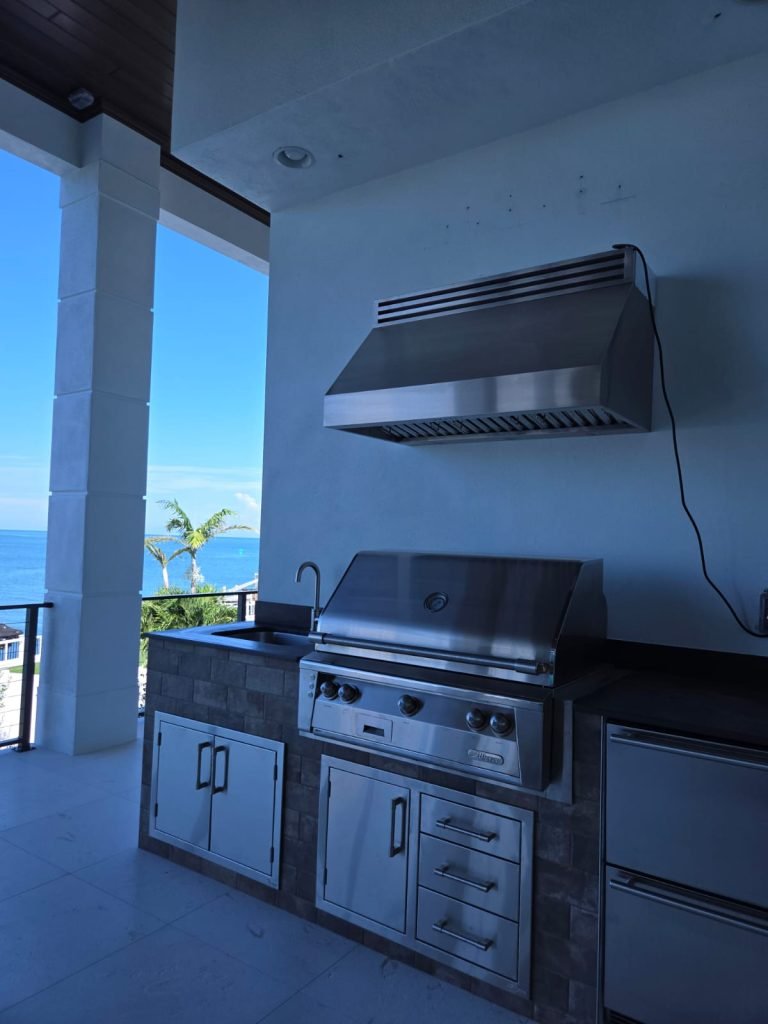
Blocked Exterior Vent Covers Trap Exhaust Air
Exterior vent covers are often overlooked during routine home maintenance. These covers protect vents from pests and weather, but they can become clogged with grease residue, lint, and outdoor debris. In Tampa, heavy rain and vegetation growth can also obstruct vent openings.
Signs exterior vents may be restricting airflow include:
- Weak airflow was felt near the range hood
- Odors lingering after cooking
- Excess heat remaining in the kitchen
- Visible residue around exterior vent covers
Clearing exterior obstructions restores proper exhaust flow and prevents back pressure inside the system.
Aging Fans Lose Power and Efficiency Over Time
Even when vents are relatively clean, aging exhaust fans may lose strength. Motors wear down, blades collect residue, and internal components degrade with use. As fan output decreases, the system struggles to move air through the duct network. Tampa kitchens experience frequent fan use due to year round cooking and air conditioning cycles, accelerating wear. Reduced fan efficiency often goes unnoticed until airflow becomes significantly weaker, especially when combined with duct buildup.
Lack of Regular Cleaning Accelerates Performance Loss
Kitchen ventilation systems require periodic cleaning to maintain airflow. Many homeowners clean visible hood surfaces but ignore internal ducts and components. Over time, residue builds up layer by layer, restricting airflow and forcing fans to work harder.
Without routine cleaning, systems may experience:
- Increased energy use during operation
- Reduced the removal of heat and odors
- Higher internal temperatures during cooking
- Shortened fan motor lifespan
Consistent maintenance helps ventilation systems perform as designed over the long term.
Poor Airflow Allows Odors and Pollutants to Circulate Indoors
When ventilation efficiency drops, cooking odors, smoke, and airborne particles remain inside the home instead of being expelled outdoors. These pollutants spread beyond the kitchen into living spaces. In Tampa homes where windows often remain closed due to heat, trapped pollutants can affect indoor comfort. Reduced airflow also allows grease particles to settle on surfaces, increasing cleaning needs and contributing to long-term indoor air quality concerns.
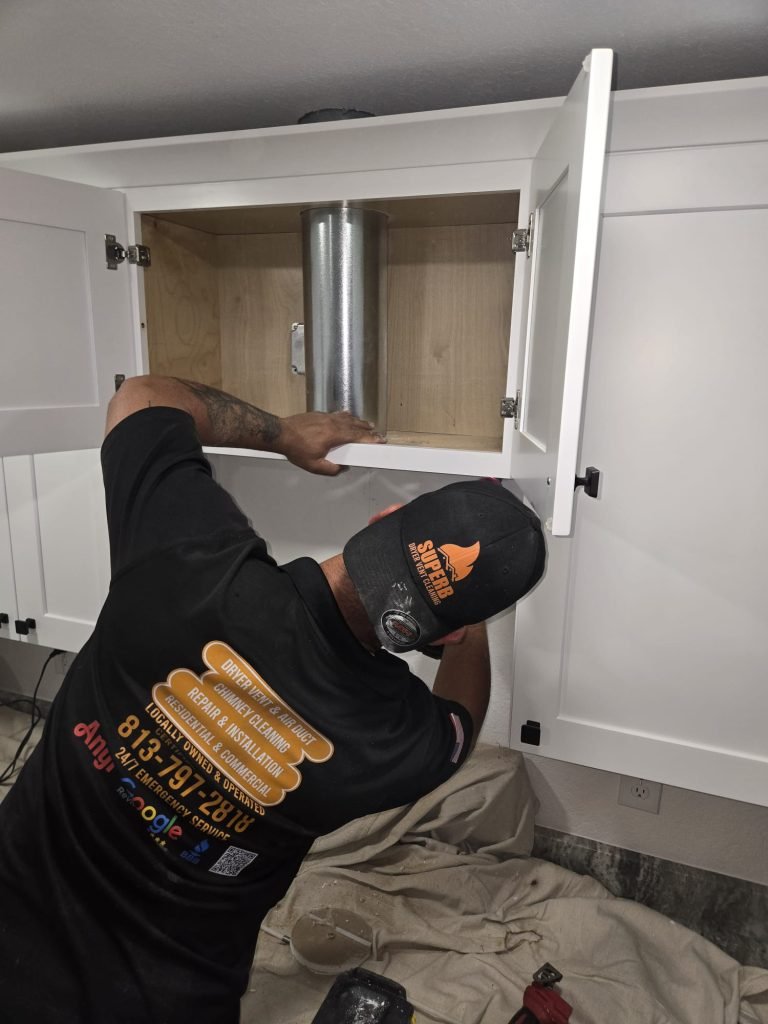
System Size Mismatch Limits Ventilation Effectiveness
Some kitchens use ventilation systems that are undersized for the cooking environment. High heat cooking, frequent use, and larger kitchens require stronger airflow capacity. When ventilation systems lack adequate power, efficiency declines faster as residue builds up. Overworked systems struggle to overcome duct resistance and moisture conditions common in Tampa kitchens. Proper sizing ensures sufficient airflow even as normal buildup occurs over time.
Delayed Maintenance Turns Small Issues Into Major Problems
Minor airflow reductions often go unnoticed until problems worsen. By the time homeowners recognize poor ventilation, the buildup may already be extensive. Delayed maintenance increases the difficulty and cost of restoring performance. Regular inspection allows small issues, such as early residue accumulation or vent obstructions, to be addressed before they significantly impact efficiency. Proactive care keeps ventilation systems operating smoothly and prevents avoidable airflow loss.
Conclusion
Kitchen ventilation efficiency in Tampa homes declines gradually due to grease buildup, humidity, aging components, and overlooked maintenance. These factors work together to restrict airflow, trap heat, and reduce the system’s ability to remove cooking byproducts. Understanding the real reasons behind ventilation decline helps homeowners recognize early warning signs and take action before performance drops significantly. In the final stage of maintaining long-term airflow, Superb Dryer Vent Cleaning offers professional insight, service options, and contact access throughout the website, including support for kitchen exhaust systems and related airflow solutions.
Frequently Asked Questions
1. Why does my kitchen still smell after cooking?
Poor airflow caused by buildup or blockages often traps odors.
2. Does humidity affect kitchen ventilation?
Yes, moisture accelerates residue buildup inside vents.
3. How often should kitchen vents be cleaned?
Frequency depends on cooking habits and system use.
4. Can exterior vent covers reduce airflow?
Yes, blocked covers restrict exhaust air movement.
5. Do old fans lose power?
Fan motors weaken over time, reducing airflow.
6. Is weak airflow always visible?
No, internal buildup is often hidden.
7. Can poor ventilation affect indoor air quality?
Yes, pollutants circulate instead of exiting the home.
8. Does vent design matter?
Shorter, straighter duct runs improve efficiency.
9. Can undersized systems cause problems?
Yes, insufficient airflow capacity reduces performance.
10. What is the first sign of declining ventilation?
Lingering heat and odors after cooking are common indicators.