

Cooking at home is a daily routine for many, but how often do you think about the condition of your kitchen range hood? This essential appliance silently works to remove smoke, grease, and odors from your kitchen. When it starts to fail, the effects can be more serious than just lingering smells. From poor indoor air quality to hidden grease buildup, a malfunctioning range hood can lead to health and fire risks.
In this guide, we’ll walk you through the top signs your kitchen range hood needs repair, what causes those issues, and how to address them before they become costly or dangerous.
What Does a Kitchen Range Hood Do?
A kitchen range hood plays a critical role in maintaining a safe and comfortable cooking environment. It draws in air contaminated by cooking fumes and pushes it outside or filters and recirculates it back into the kitchen.
Key functions include:
- Removing smoke, steam, and grease particles
- Eliminating strong cooking odors
- Preventing moisture buildup that can lead to mold
- Reducing airborne grease that clings to cabinets and walls
Without a properly functioning hood, you risk more than just an unpleasant smell. Poor ventilation can damage kitchen surfaces and compromise air quality. Learn more about ventilation support by visiting our services page.
Sign 1: Weak or No Suction Power
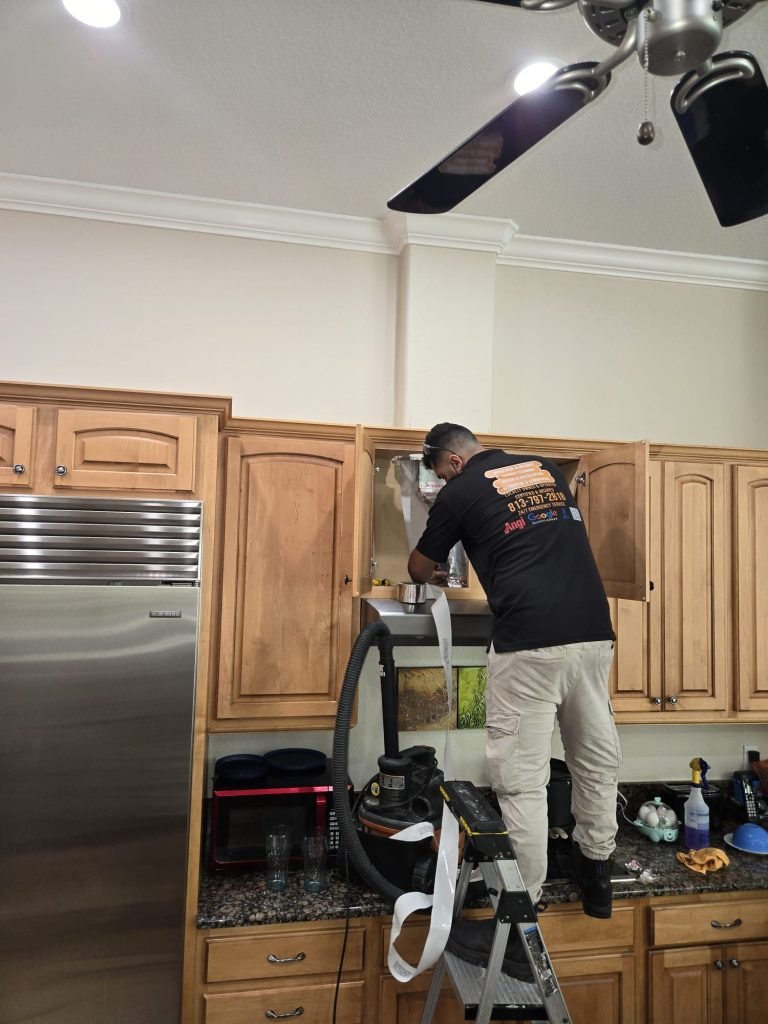
One of the first and most obvious signs your kitchen range hood needs repair is a noticeable drop in suction power. If smoke or steam is not being removed efficiently, something is likely wrong with the fan motor, filters, or ductwork.
Possible causes include:
- Clogged grease filters
- Faulty blower motor
- Blocked exhaust vent
Without proper airflow, your range hood fails to perform its main function. If you’re facing this issue, you may also notice steam accumulating on walls and cabinets during cooking.
Sign 2: Excessive Noise During Operation
While some range hoods naturally produce noise, sudden loud or rattling sounds indicate trouble. This could mean:
- A loose or damaged fan blade
- A failing motor bearing
- Vibration due to improper installation
Ignoring these noises can result in complete fan failure. The sooner a technician inspects the hood, the easier and cheaper the fix. Unusual sounds from other appliances may also point to broader ventilation system issues, often linked with poor duct maintenance.
Sign 3: Lights Are Flickering or Not Working
Many kitchen hoods have built-in lighting to improve visibility while cooking. If those lights begin to flicker, dim, or go out completely, the problem could be:
- Burned-out bulbs
- Faulty wiring or switches
- Electrical component failure within the hood
Though it may seem minor, faulty lighting can signal deeper electrical issues that affect the entire unit. It’s best to have a professional diagnose the problem instead of repeatedly replacing bulbs without success.
Sign 4: Persistent Odors in the Kitchen
A functioning range hood should remove cooking smells quickly. If odors linger long after meals are prepared, it could be a sign that:
- Filters are dirty or clogged
- Recirculating systems are not functioning properly
- Exhaust ducts are blocked
Over time, grease-soaked filters lose their ability to trap airborne particles. This is not only unpleasant but can also contribute to poor indoor air quality. Regular inspection and filter cleaning should be a part of your kitchen care routine.
For ventilation cleaning solutions, see our Tampa service options.
Sign 5: Grease Buildup Around the Hood
If you notice sticky residue on your walls, cabinets, or the range hood itself, it may be a sign the grease traps and filters are no longer functioning effectively.
Unchecked grease accumulation can:
- Create a fire hazard
- Attract pests
- Cause paint or finishes to degrade
In serious cases, grease buildup can drip back onto your stove or food. This is a clear warning that your filters need cleaning or replacement and the ventilation system requires attention.
Explore more on range hood filter care at our kitchen range hood service page.
Sign 6: Hood Doesn’t Turn On or Off Properly
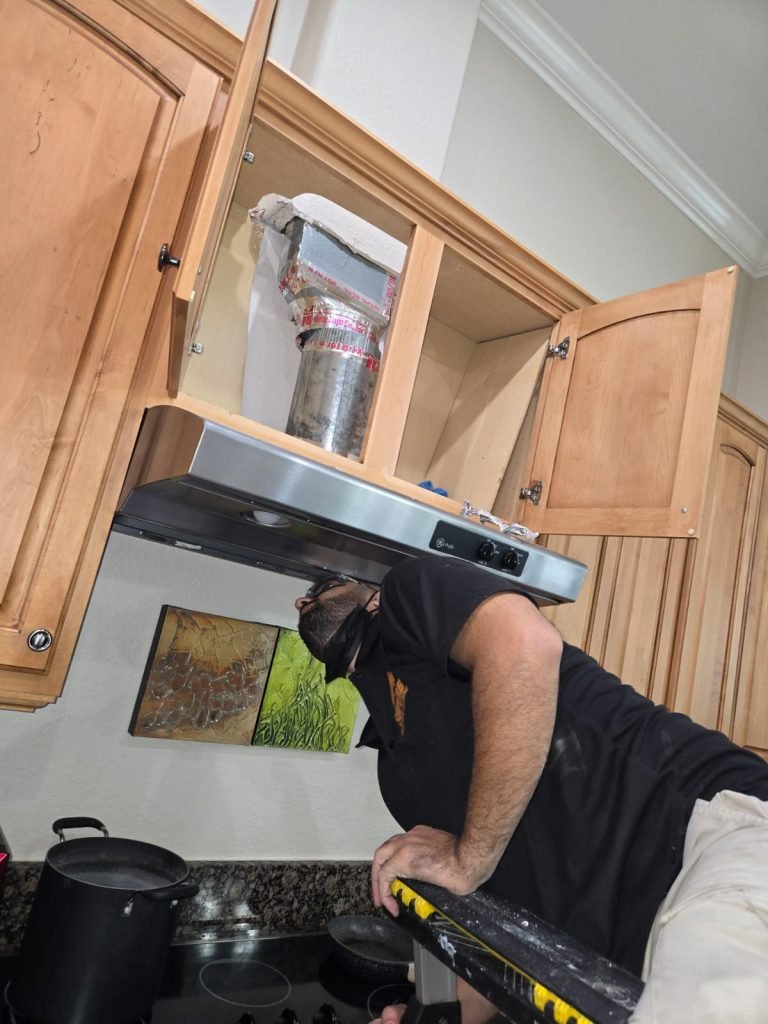
If the hood refuses to power on or doesn’t shut down correctly, it may be due to:
- Electrical switch failure
- Circuit board malfunction
- Damaged wiring
Electrical issues should always be handled by professionals to avoid shock risks or further damage. Delays in repair may lead to a complete unit replacement rather than a simple fix.
For more about appliance safety and inspection processes, check out our about page.
Sign 7: Smoke Detectors Go Off During Cooking
If your smoke detector frequently gets triggered even during light cooking, it could indicate that your range hood is not doing its job.
This might be because:
- Suction is too weak to remove smoke
- Ducts are blocked or leaking
- Filters need replacing
These false alarms are annoying and may lead you to disable your detectors, which is unsafe. Fixing the root cause in the range hood system keeps your kitchen safer and more functional.
FAQ Section
1. How often should I clean the filters in my range hood?
At least once a month for mesh filters, or every 3 to 6 months for charcoal filters.
2. What causes a range hood to stop sucking air?
Clogged filters, motor failure, or blocked ducts are the most common causes.
3. Can I replace the fan motor myself?
While some homeowners attempt DIY repairs, it’s best to let professionals handle electrical components.
4. Is grease buildup dangerous?
Yes, grease is highly flammable and can lead to kitchen fires if not removed.
5. What is the average lifespan of a kitchen range hood?
With proper maintenance, a range hood can last 10 to 15 years.
6. Why does my range hood make a clicking noise?
This could indicate a loose fan blade or worn-out motor parts.
7. Are recirculating hoods effective?
They work well with clean filters but are less effective than vented systems for removing heat and smoke.
8. Can range hoods be upgraded or modified?
Yes, upgrades are possible with improved motors, better filters, or lighting enhancements.
9. How do I know if my duct is blocked?
Slow smoke clearance, weak suction, and backflow of air are common indicators.
10. What happens if I ignore these issues?
Neglecting maintenance can lead to fire hazards, poor air quality, and costly appliance replacements.
Conclusion
Your kitchen range hood is a silent workhorse, but when it fails, the impact is loud and clear. From persistent odors and poor air suction to electrical issues and fire hazards, ignoring early warning signs can cost you comfort and safety. Routine inspection, cleaning, and timely repair not only keep your cooking space healthier but also extend the life of your kitchen appliances. If you’ve noticed any of these range hood failure signs, it’s time to act. Visit our kitchen range hood service page for expert help and inspection details. You can also schedule a visit through our contact page or browse additional ventilation and repair services available in Tampa. Protect your kitchen today before minor issues become major problems.