

Florida’s hurricane season can be relentless. While many homeowners prepare their windows and roofs, the chimney often gets overlooked. Yet, this critical structure is vulnerable to wind, water, and flying debris. A damaged or unstable chimney can quickly become a safety hazard when powerful storms hit. Are you confident yours can handle it?
In this blog, we’ll uncover the top 5 warning signs that indicate your chimney isn’t ready for a Florida hurricane. By knowing what to watch for, you can act early and avoid extensive hurricane chimney damage.
Cracked or Crumbling Masonry
A chimney’s strength lies in its brickwork. However, Florida’s constant exposure to heat, rain, and humidity can cause mortar joints to deteriorate over time. Small cracks might seem harmless, but they can widen with every storm and weaken the structural integrity of your chimney.
Watch for:
- Gaps between bricks
- Loose or flaking mortar
- Discoloration or moss growth
Ignoring these signs increases the chance of water infiltration, which can compromise your chimney’s durability. Learn how to address these issues early through a full chimney inspection before storm season arrives.
Missing or Damaged Chimney Cap
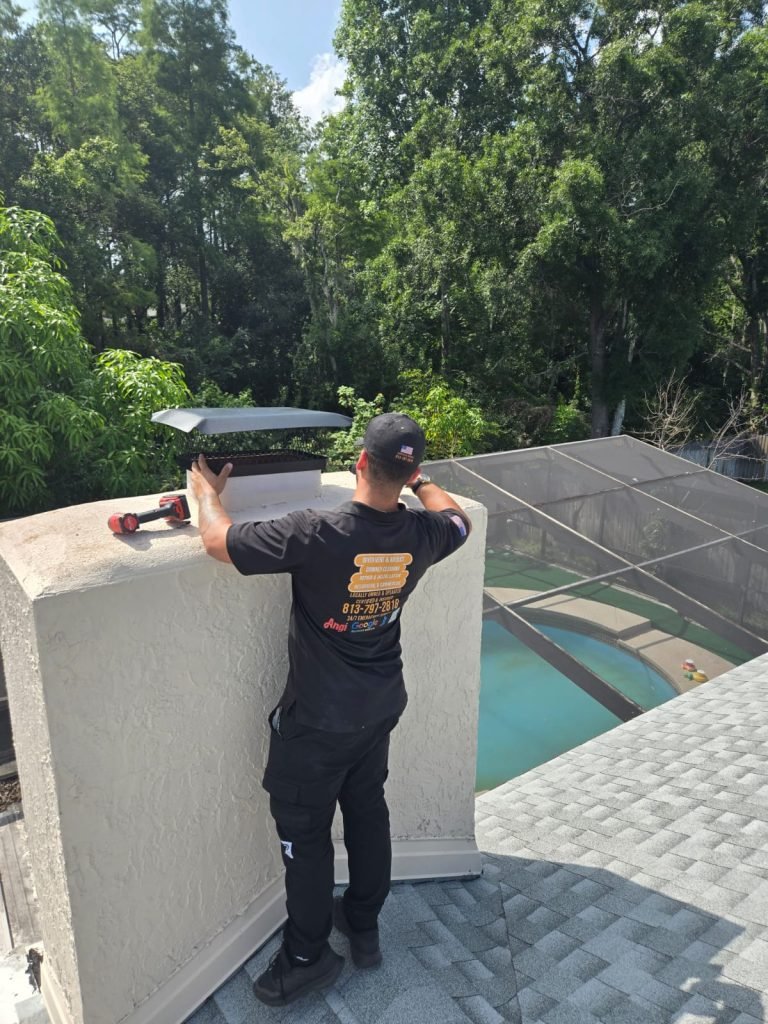
Your chimney cap plays a key role in protecting your chimney from rain, debris, and animal intrusion. In a hurricane, strong gusts can blow off a poorly secured cap or allow rain to enter the flue.
A missing or rusted chimney cap can result in:
- Water damage inside the flue
- Mold buildup
- Increased chance of internal fires due to debris
Before the season ramps up, check if your chimney cap is secure and made of rust-resistant materials. If not, it’s time to have it replaced. A fire hazard inspection can also identify this issue before it turns serious.
Leaning or Unstable Structure
Even a slightly leaning chimney should never be ignored. This is a serious structural issue that hurricanes can rapidly worsen. High winds put immense lateral pressure on chimneys, especially if they already lack support.
What to look for:
- Chimney appears tilted when viewed from a distance
- Visible separation from the home’s siding or roofline
- Cracks forming at the chimney base
An unstable chimney can collapse during a storm, damaging your home and endangering your family. Professional chimney repair in Tampa can reinforce the structure and prevent further deterioration.
Signs of Water Intrusion
Water is the silent enemy of chimneys. Persistent leaks from prior storms may have already damaged your chimney from the inside out. You might not notice this until the next hurricane makes it worse.
Common red flags include:
- Damp smells in the fireplace
- Rusty damper or firebox
- Staining on interior walls near the chimney
- White stains (efflorescence) on bricks
Left untreated, water intrusion leads to rapid brick decay and mold formation. Address the issue through a complete chimney and fire safety inspection to stay ahead of the damage.
Blocked or Dirty Flue
Your chimney’s flue needs to be clear to vent properly. Over time, creosote, debris, or nesting animals can block airflow. This doesn’t just reduce efficiency but also creates a severe fire hazard—especially during a storm when wind pressure affects ventilation.
Blocked flues can result in:
- Smoke backing into the home
- Carbon monoxide accumulation
- Increased risk of chimney fires
Before hurricane season, schedule a chimney cleaning as part of your hurricane preparedness plan. This ensures safe airflow and reduces fire risks under extreme weather conditions.
Conclusion
Your chimney may seem like a solid fixture, but it’s more vulnerable than you think. With Florida’s storm season approaching, taking steps now can save you from expensive chimney repairs and dangerous emergencies later. Cracks, cap damage, instability, leaks, and blockages are all signals that your chimney isn’t ready for what’s coming.
Take hurricane preparedness seriously by inspecting and maintaining your chimney just like you would your roof or windows. Being proactive protects your home and everyone inside.
Call to Action
Unsure if your chimney is storm-ready? The team at Superb Dryer Vent Cleaning offers detailed fire hazard inspections and comprehensive chimney services to keep your home safe. Visit our chimney service page or contact us to schedule an inspection before the next storm hits. For more tips, check out our latest updates on the blog.
FAQ Section
How often should I have my chimney inspected in Florida?
At least once a year, especially before hurricane season. Inspections catch cracks, leaks, and blockages early.
What is the best way to waterproof a chimney?
Applying a breathable water-repellent sealant helps protect against rain without trapping moisture inside.
Can hurricanes cause my chimney to collapse?
Yes. High winds can bring down unstable or cracked chimneys, especially older ones not up to code.
How do I know if my chimney is leaking?
Signs include damp odors, interior wall stains, or water in the firebox after storms.
Should I cover my chimney before a hurricane?
Only with a secure and proper cap. Avoid DIY tarps or plugs, as these can cause more harm than good.
Is it safe to use the fireplace after a hurricane?
Not until it’s been inspected. Storms can dislodge parts of the chimney or block the flue.
What does a chimney cap do during a storm?
It keeps rain, wind-driven debris, and animals out of the flue, preventing blockages and water damage.
How much does chimney repair in Tampa usually cost?
It varies by damage level but early inspections and minor fixes are more affordable than full rebuilds.
What is creosote and why is it dangerous?
Creosote is a flammable residue from burning wood. If not cleaned, it can ignite and cause chimney fires.
Can animals nest in chimneys during storm season?
Yes. Birds and rodents often seek shelter. A chimney cap with a screen helps keep them out.Tools